 MosaTrajectum is a Golf Resort with villas and apartments near the Spanish city of Murcia. The whole village is walled in by some pseudo ruins. It looks like the architect took his inspirations mainly from Jurassic Park.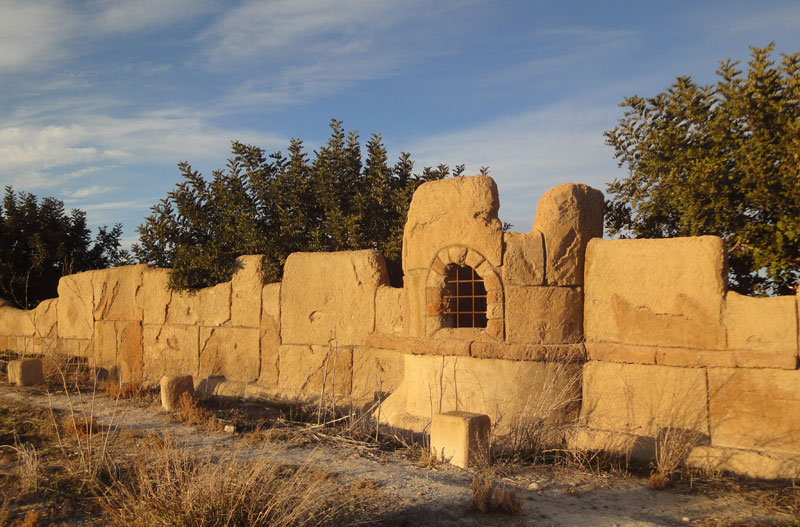
 MosaTrajectum is a Golf Resort with villas and apartments near the Spanish city of Murcia. The whole village is walled in by some pseudo ruins. It looks like the architect took his inspirations mainly from Jurassic Park.

 Chelsea Market in Manhattan. A shopping mall and fruit market in Manhattan constructed 2006 in an old factory. There are a lot of elements quoting ruin and decay.
 Greek/Roman temple
 Norman castle with the tank in front
 It is the so called Ponte Ruinante (the ruined bridge) part of the Palazzo Barberini in Rome and probably designed by the Italian artist and architect Gian Lorenzo Bernini (1598-1680). The currently derelict bridge was already by Bernini constructed as a ruin with one of the vault stones looking as it was coming down. Bernini tried to imitate the ancient Roman ruins. As far as I know the Ponte Ruinante is maybe the first artificial ruin, the first folly ruin.


 To be serious, I was surprised indeed when I stumbled upon this website. But then I found it a good idea to offer these gothic walls to "provide a charming setting for quiet contemplation or even early evening cocktails".

 But it was neither roman nor a temple, it was already constructed as a ruin (between 1784 and 1787). The classical taste of that time loved roman ruins decorating a bucolic landscape.


